Wednesday, October 19, 2016

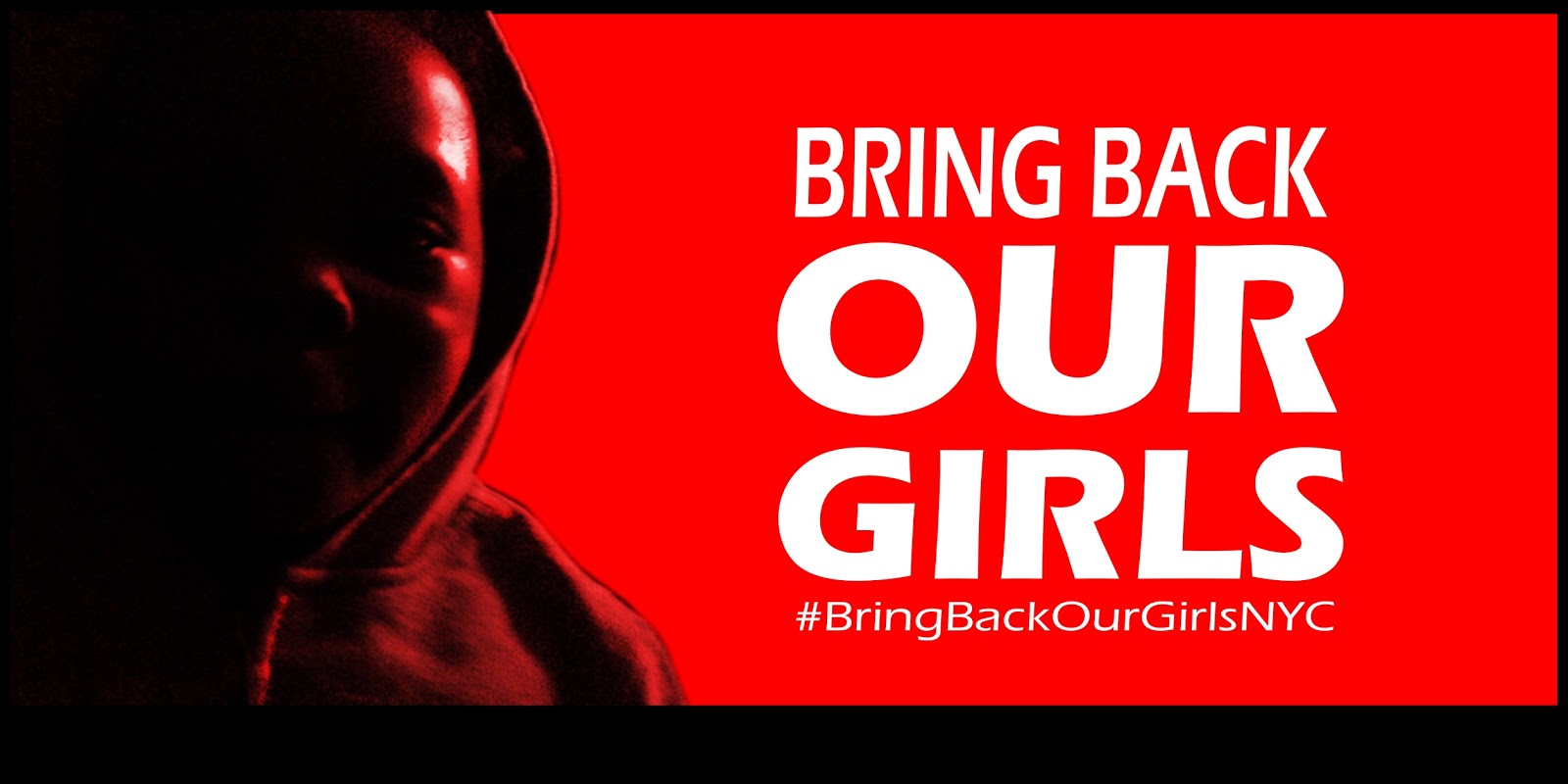
#BringBackOurGirlsNYC rejoices with our 21 #ChibokGirls who were released on October 13, 2016


FOR IMMEDIATE RELEASE
Contact: Mojúbàolú Olufúnké Okome
(718) 951-5000 x 1742
NYC Sunday October 16, 2016

On Thursday, October 13, with great joy, hope and optimism for the future, #BringBackOurGirlsNYC welcomed the news of the release of 21 of our #ChibokGirls from Boko Haram captivity. We rejoice with our #ChibokGirls, their families and friends.  We hope and pray that the 197#ChibokGirls and other Nigerians remaining in Boko Haram captivity are also rescued and reunited with their families as soon as possible.
The rescued #ChibokGirls have been reunited with their families amidst a combination of tears, joy and laughter. #BringBackOurGirlsNYC salutes the efforts of the Federal Government of Nigeria and other parties that made this release possible.
These 21 #ChibokGirls have suffered unimaginable physical, mental and psychological trauma.  They require a well-grounded structure for long-term, culturally-appropriate psychosocial care.  While we are happy that they are home and grateful for their rescue, we should endeavor not to further traumatize them by continually placing them under the public microscope of the media to satisfy our curiosity and propaganda.
The road to recovery has begun for these girls and we hope that they all recover in every way possible.  We rejoice with the parents, families, loved ones, and well wishers of the 21 #ChibokGirls. To them we say, CONGRATULATIONS! #BringBackOurGirlsNYC advocates that every possible mechanism be deployed for their successful reintegration into society.

#BringBackOurGirlsNYC will continue to campaign for the release of our 197 #ChibokGirls. With renewed hope, we shall push harder.  We call on all people of good conscience to join us as we demand the rescue and reunification of all our #ChibokGirls and other Nigerians in Boko Haram captivity with their families.


#BringBackOurGirlsNYC rejoices with our 21 #ChibokGirls who were released on October 13, 2016


FOR IMMEDIATE RELEASE
Contact: Mojúbàolú Olufúnké Okome
(718) 951-5000 x 1742
NYC Sunday October 16, 2016

On Thursday, October 13, with great joy, hope and optimism for the future, #BringBackOurGirlsNYC welcomed the news of the release of 21 of our #ChibokGirls from Boko Haram captivity. We rejoice with our #ChibokGirls, their families and friends.  We hope and pray that the 197#ChibokGirls and other Nigerians remaining in Boko Haram captivity are also rescued and reunited with their families as soon as possible.
The rescued #ChibokGirls have been reunited with their families amidst a combination of tears, joy and laughter. #BringBackOurGirlsNYC salutes the efforts of the Federal Government of Nigeria and other parties that made this release possible.
These 21 #ChibokGirls have suffered unimaginable physical, mental and psychological trauma.  They require a well-grounded structure for long-term, culturally-appropriate psychosocial care.  While we are happy that they are home and grateful for their rescue, we should endeavor not to further traumatize them by continually placing them under the public microscope of the media to satisfy our curiosity and propaganda.
The road to recovery has begun for these girls and we hope that they all recover in every way possible.  We rejoice with the parents, families, loved ones, and well wishers of the 21 #ChibokGirls. To them we say, CONGRATULATIONS! #BringBackOurGirlsNYC advocates that every possible mechanism be deployed for their successful reintegration into society.

#BringBackOurGirlsNYC will continue to campaign for the release of our 197 #ChibokGirls. With renewed hope, we shall push harder.  We call on all people of good conscience to join us as we demand the rescue and reunification of all our #ChibokGirls and other Nigerians in Boko Haram captivity with their families.


Saturday, October 1, 2016

#900DaysOn #BringBackOurGirls


On April 14, 2014, 276 schoolgirls were abducted by Boko Haram from Government Girls Secondary School, Chibok, in Borno State, Nigeria. 58 girls were able to escape. 218 remain in captivity. #BringBackOurGirlsNYC is a coalition of Nigerians, Nigerian Americans, Africans, Diasporan Africans and friends of Nigeria resident in New York City. We intend to redouble our efforts and continue to protest until these girls are brought back to their families. Do join us in this online action to call for their rescue by the Nigerian government and international community. 

Here below is the call: 

“Our #ChibokGirls, #900DaysOn- #WayToolong! #Nevertobeforgotten! #HopeEndures #BringBackOurGirls!


Please keep sharing far and wide on social media until our #ChibokGirls are rescued. Thank you. 

Warm regards,
Mojúbàolú Olufúnké Okome
For #BringBackOurGirlsNYC


Monday, August 15, 2016

#BringBackOurGirlsNYC Statement: New “Proof of Life” Video on Our #ChibokGirls


FOR IMMEDIATE RELEASE
Contact: Mojúbàolú Olufúnké Okome
mojubaolu@gmail.com
(718) 951-5000 x 1742
NYC Monday 15th August 2016

Yesterday, on Day 853 after the abduction of our #ChibokGirls, a new “proof of life” video about our #Chibokgirls was in circulation, broadly disseminated and widely commented upon in the media.  It is heartrending that these young women have been in captivity for so long in the hands of brutal, violent insurgents who are determined to use them as bargaining chips for their diabolical power-seeking agenda.  It is unfortunate that our #Chibokgirls have been left at the mercy of their abductors for 854 days today.  We are saddened and disheartened that our #Chibokgirls families and loved ones have had to cope for so long with their absence.  Nonetheless, we are determined to be hopeful that our #Chibokgirls and all other abducted Nigerians, particularly the girls, boys, and women will all be rescued and reunited with their families by the Nigerian government and the international community. 
To quote BringBackOurGirls in Nigeria’s translation (by Dr. Manasseh Allen, Spokesman of the Kibaku Area Development Association (KADA) in Abuja) and transcription of some of the message in the video from the Kibaku language spoken by Dorcas Yakubu:

“Our parents please exercise patience. We are suffering here. There is no kind of suffering we haven’t seen. Our sisters are injured, some have wounds on their heads and bodies. Tell the government to give them their people so we can also come to be with you. We are all children and we don’t know what to do. The suffering is too much, please endeavour as we also have exercised patience. There is nothing you, or we, can do about this but to get their people back to them, so we can go home. Exercise patience as we also have endured.”

Given that guaranteeing the safety and security of citizens is a constitutional duty of the state, the rescue of our #Chibokgirls and all other abducted Nigerians must be given more priority than observed thus far.  The international community must also rise to the challenge and demonstrate its commitment to the rescue and reunification of our #Chibokgirls and all other abducted Nigerians. 
The BringBackOurGirls movement has steadfastly and unflaggingly called for our #ChibokGirls rescue. The Nigerian government must redouble efforts to rescue our #Chibokgirls and all other abducted Nigerians.  This is key to demonstrating Nigeria’s sovereignty: that it is not a place where a band of homicidal insurgents can swoop in, abduct citizens, and hold them in captivity at will.  It is key to demonstrating that the Nigerian state is mindful of its constitutional responsibility to all Nigerian citizens.  It is key to demonstrating that the Nigerian government cares about the plight of citizens subjected to cruel and unusual brutality, violence and torture.  The international community also owes a duty.  It must demonstrate that its lofty statements are not just platitudes.  When some of us are insecure, all of us are insecure.  The rescue of our #Chibokgirls and all other abducted Nigerians is a matter of urgent necessity and should be treated as such.  Once the rescue is done, reunification with their families, psychosocial care, guarantees of safety and security for affected communities from further insurgent violence is required.
According to a report by The Guardian, after viewing the video, Dorcas Yakubu, Esther Yakubu’s mother said with “tears running down her face”: 


“From birth, I have been planning for you – your life, your education, your health. Before you were kidnapped,” …Up till now, I have not seen or heard anything from you. But I believe that one day, I will fulfil that, my promise to you, and I will see you again, and my happiness, my joy, my life will be complete with you.”


How much pain do we expect parents to bear?  How best can we demonstrate the commitment to rescue their children?  We commend BringBackOurGirls in Nigeria for its proposed march to the Nigerian Presidential Villa at Aso Rock and urge all people of good conscience to join them in the call for the rescue of our #Chibokgirls and all other abducted Nigerians and their reunification with their families.  We at #BringBackOurGirlsNYC support BringBackOurGirls in Nigeria and remain hopeful that very soon, our #Chibokgirls and all other abducted Nigerians, particularly the girls, boys, and women will all be rescued and reunited with their families by the Nigerian government and the international community. 

For #BringBackOurGirlsNYC
Mojúbàolú Olufúnké Okome
Professor of Political Science, African & Women's Studies
Leonard & Claire Tow Professor, 2015/2016
Brooklyn College, CUNY


New “Proof of Life” Video on Our #ChibokGirls

FOR IMMEDIATE RELEASE
Contact: Mojúbàolú Olufúnké Okome
mojubaolu@gmail.com
(718) 951-5000 x 1742
NYC Monday 15th August 2016

Yesterday, on Day 853 after the abduction of our #ChibokGirls, a new “proof of life” video about our #Chibokgirls was in circulation, broadly disseminated and widely commented upon in the media.  It is heartrending that these young women have been in captivity for so long in the hands of brutal, violent insurgents who are determined to use them as bargaining chips for their diabolical power-seeking agenda.  It is unfortunate that our #Chibokgirls have been left at the mercy of their abductors for 854 days today.  We are saddened and disheartened that our #Chibokgirls families and loved ones have had to cope for so long with their absence.  Nonetheless, we are determined to be hopeful that our #Chibokgirls and all other abducted Nigerians, particularly the girls, boys, and women will all be rescued and reunited with their families by the Nigerian government and the international community. 
To quote BringBackOurGirls in Nigeria’s translation (by Dr. Manasseh Allen, Spokesman of the Kibaku Area Development Association (KADA) in Abuja) and transcription of some of the message in the video from the Kibaku language spoken by Dorcas Yakubu:

“Our parents please exercise patience. We are suffering here. There is no kind of suffering we haven’t seen. Our sisters are injured, some have wounds on their heads and bodies. Tell the government to give them their people so we can also come to be with you. We are all children and we don’t know what to do. The suffering is too much, please endeavour as we also have exercised patience. There is nothing you, or we, can do about this but to get their people back to them, so we can go home. Exercise patience as we also have endured.”

Given that guaranteeing the safety and security of citizens is a constitutional duty of the state, the rescue of our #Chibokgirls and all other abducted Nigerians must be given more priority than observed thus far.  The international community must also rise to the challenge and demonstrate its commitment to the rescue and reunification of our #Chibokgirls and all other abducted Nigerians. 
The BringBackOurGirls movement has steadfastly and unflaggingly called for our #ChibokGirls rescue. The Nigerian government must redouble efforts to rescue our #Chibokgirls and all other abducted Nigerians.  This is key to demonstrating Nigeria’s sovereignty: that it is not a place where a band of homicidal insurgents can swoop in, abduct citizens, and hold them in captivity at will.  It is key to demonstrating that the Nigerian state is mindful of its constitutional responsibility to all Nigerian citizens.  It is key to demonstrating that the Nigerian government cares about the plight of citizens subjected to cruel and unusual brutality, violence and torture.  The international community also owes a duty.  It must demonstrate that its lofty statements are not just platitudes.  When some of us are insecure, all of us are insecure.  The rescue of our #Chibokgirls and all other abducted Nigerians is a matter of urgent necessity and should be treated as such.  Once the rescue is done, reunification with their families, psychosocial care, guarantees of safety and security for affected communities from further insurgent violence is required.
According to a report by The Guardian, after viewing the video, Dorcas Yakubu, Esther Yakubu’s mother said with “tears running down her face”: 


“From birth, I have been planning for you – your life, your education, your health. Before you were kidnapped,” …Up till now, I have not seen or heard anything from you. But I believe that one day, I will fulfil that, my promise to you, and I will see you again, and my happiness, my joy, my life will be complete with you.”


How much pain do we expect parents to bear?  How best can we demonstrate the commitment to rescue their children?  We commend BringBackOurGirls in Nigeria for its proposed march to the Nigerian Presidential Villa at Aso Rock and urge all people of good conscience to join them in the call for the rescue of our #Chibokgirls and all other abducted Nigerians and their reunification with their families.  We at #BringBackOurGirlsNYC support BringBackOurGirls in Nigeria and remain hopeful that very soon, our #Chibokgirls and all other abducted Nigerians, particularly the girls, boys, and women will all be rescued and reunited with their families by the Nigerian government and the international community. 

For #BringBackOurGirlsNYC
Mojúbàolú Olufúnké Okome
Professor of Political Science, African & Women's Studies
Leonard & Claire Tow Professor, 2015/2016

Brooklyn College, CUNY


Friday, August 12, 2016

BOKO HARAM: FAME, NOTORIETY, OR ANONYMITY?


Gbemisola Adesanya, M.A. Candidate, Brooklyn College, CUNY
On a fine summer afternoon, as I sat in my office cubicle and read an article sent to me by Professor Mojúbàolú Olufúnké Okome, I unconsciously began to think about a new blog post. This article talks about the reasons why the notoriety of terrorists should be subject to obscurity and the arguments rest on three reasons, which would be subsequently discussed in this post. Bringing this into the Nigerian context of Boko Haram, one can safely aver that the terrorist group has received a ginormous amount of media attention. One of my “Google Alerts” subscriptions is Boko Haram and I receive tons of news on the subject daily.
One of the compelling reasons why Boko Haram should not be a debutante on media red carpets is that by publicizing the names and works of these terrorists, we are giving them international recognition (fulfilling one of their greatest desires) and making them a global force to be reckoned with. National and international news reports such as this embellish their atrocities, almost reverently.
Another major reason, one many people would agree with is that all of this undue publicity is making terrorism a cliché. Daily news by various media channels of the horrific activities of Boko Haram no longer leaves a bitter taste in our mouths. People see news headlines such as “Boko Haram attacks village in Borno” or “Boko Haram leader, Abubakar Shekau threatens to take over more cities” and idly glance at it with a disinterest borne of repeatedly reading similar headlines.
Worse still, people take it upon themselves to try to understand or not understand why terrorists do what they do. I once carried out a three-level analysis (Individual, State, and Systemic levels) of Osama bin Laden and I realized that my individual analysis of him had begun to cast him in sympathetic light. No one wants to know the personal life experiences and forces that shaped the present life of the Boko Haram head. Telling us about his life might begin humanize him and cast him in sympathetic light
Broadcasting Boko Haram’s actions is also very dangerous because it creates room for a copycat effect. Heavily advertising the sect leaves an imprint on young, vulnerable minds, especially in the Northeast of Nigeria. Think about it this way: all your life, you have used Close Up toothpaste and it serves you quite well. All of a sudden, everywhere you turn, there is an advert of Oral-B. You switch on the TV, it’s there. You open the newspaper, a full-page advert. Listening to the radio on the way to work, you are reminded that there’s a new toothpaste that will make you smile brighter. Driving back home from work, there’s a new billboard; a beautiful family with great white smiles all holding Oral-B. The next time you are in the market getting household necessities, you just might find yourself ignoring Close Up to “try” Oral-B. All of the news informing us of Boko Haram massacres portray the power and strength, the fierce brutality and daring of the group. Continually releasing videos of the leader’s message in the hopes of revealing how obnoxious his threats and demands are also displays his charisma, particularly to impressionable minds.
In December, speaking on Channels TV, the Nigerian Minister of Information and Culture, Lai Mohammed said, “We want to appeal to the media to stop giving oxygen to the Boko Haram insurgency. When we glamorize the attacks, it gives the terrorists more life and in a time of insurgency like this, the media also has a role to play.” While many people received his statements with skepticism and had dissenting opinions, (partly because of his insistence that Nigeria has technically won the war against Boko Haram), there is a lot of truth to his statement.
Having said all this, I would also like to acknowledge that there are reasons why the insurgents and insurgency receive a lot of media attention in the first place. The media attention is not absolutely gratuitous. News information about their activities is disseminated in hopes of stopping them, to raise awareness, and to reassure the victims as well as their families that their plight has not been forgotten.
The big question is:  To publicize or not to publicize? I have discussed some of the dangers of publicizing the group, but exactly what good would it do if we do not speak of them? Would this strategy appear sensible to millions of Nigerians clamoring for justice, to the families of our fallen heroes, to those families that have been displaced and destroyed by the insurgency? At this point, not reportage on Boko Haram would not be very helpful.

In this fight against insurgency, we need to keep the information to the basics. The media is a principal actor in counterterrorist struggles and it should act accordingly. Sensational headlines and stories should be curtailed. Information about the leader of the insurgency and their violent, brutal, and cruel actions should not be presented like juicy stories about a celebrity scandal. It is high time we stopped plastering the excesses of Boko Haram all over the media. We need a broad agreement within the media to limit the descriptions of terrorist criminals and crimes to no more than the bare essentials.

Saturday, July 30, 2016

#BringBackOurGirls and the Nigerian Government


Gbemisola Adesanya, M.A. Candidate, Brooklyn College, CUNY
“While their intentions are honorable, perhaps the #Bringbackourgirls leadership have not considered the collateral damage which must inevitably follow its riveting and dispiriting claim that the President has ‘broken all promises’ allegedly made to the group on this issue. Or that he has been ‘lackadaisical’ in rescuing the Chibok girls.” – Garba Shehu, official spokesperson to the Nigerian President.
A year ago, when representatives of the #Bringbackourgirls movement met with President Muhammadu Buhari,  there were many promises. All parties involved had the same objective. Suggestions were made, suggestions were accepted. Promises were made, promises were accepted. Demands were made, demands were accepted. It seemed that all parties were on the same page. A year later, the #Bringbackourgirls movement is agitated that the demands accepted by the government have not been met (for a comprehensive account of the demands, head over to the July 8 timeline of human rights activist and founder of Opinion Nigeria, @jeffokoroafor on Twitter.
#Bringbackourgirls Demands presented to President Buhari at the July 8, 2015 meeting
·         Implementation of the Verification, Authentication and Reunification System (VARS)
·         Protocol of engagement with citizens
·         A commission of inquiry for accountability on the abduction and rescue of our Chibok girls
·         The public release of committee reports of the Presidential Fact Finding Committee on Chibok Schoolgirls
·         Prevention of the recurrence of such an abduction
More information can also be found at the #BringBackOurGirls website.
Given the present situation and circumstances in Nigeria, are these demands practical and realistic? The request for the establishment of the VARS system in order to accurately determine the identities of the abducted girls after their rescue, demand for their effective rehabilitation, resettlement and psychosocial support for reintegration into the society are not only pragmatic, but also extremely essential. Requesting a structure to enable the sharing and giving of information and public release of the report of the Presidential Fact Finding Committee with concerned citizens is not only sensible, it is also a right. It is, however, the duty of the government to censor highly sensitive and classified information so as not to compromise the mission. Nonetheless, remaining taciturn is unacceptable. The #Bringbackourgirls call for the creation of a commission to investigate the security lapses that led to the abduction and prolonged captivity of the girls is justice long overdue. Finally, suggesting that the government carry out a comprehensive sensitization scheme to curb the trend of youth extremism is crucial if the government wants to stamp out the root causes of the problem. It is even more important given the youth bulge in the country.
What collateral damage will inevitably follow the outcry that the promises to #Bringbackourgirls have been broken by the government? What does it mean for the government to refuse to take criticisms from its people without rhetoric about collateral damage? What does the government mean by saying #Bringbackourgirls claims are dispiriting? Perhaps the government needs to be reminded that dissent and debate are integral aspects of democracy. The government is seemingly irritated by #Bringbackourgirls, a response that should be saved for Boko Haram, the real challengers of the nation’s sovereignty.
To doubting Thomases who still question the authenticity of the abduction, do me a favor, really sit down and think about all of these happenings. Don’t you think that 2+ years is an awfully long time to keep up such a stressful and time-consuming charade that the girls are missing? This is not a reality show or a publicity stunt to give Nigeria notoriety. What do you think the country stands to gain by pretending that 218 #ChibokGirls are still missing? An express ticket to the VIP section on the list of failed states? Global recognition as a strife-riddled state? The much coveted development indicators of economic, social, and political instability? Or perhaps is it that Nigeria stands to gain a lot in terms of international aid and diplomatic relationships based on pity for the country with 218 missing girls?
It would be remiss not to address the situation of other people that have been deeply wounded by Boko Haram. What exactly is the point of having IDP camps if the inhabitants are dying in large numbers due to negligence and inefficiency? What exactly are the Federal and State emergency management agencies doing to alleviate this heartbreaking condition? They have suffered great losses and should not be denied the services and rations necessary for survival and dignified conditions while displaced. More on the plight of the people in various camps and the ineffectiveness of the emergency management agencies can be found here and the Borno State response after the most recent news reports of horrendous conditions in the IDP camps here.
So far, #Bringbackourgirls has remained very open and steadfast about its commitment toward the #ChibokGirls. Perhaps it is now time for the government to demonstrate that it has not forgotten the promises made about rescuing our Chibok girls.. No doubt, the current state of affairs in Nigeria is an overwhelmingly daunting one, and the President is not a wizard who can make things happen at the wave of a wand. No doubt, governing Nigeria requires a lot of work and effort and maybe, just maybe, we expect too much of the President, but he went into this with his eyes wide open and should work on fulfilling all of his promises of change to the people. Our Chibok girls require meaningful and progressive cooperation between #Bringbackourgirls and the Nigerian government and this cannot happen if the government sees #Bringbackourgirls as irritating, like pesky flies on an open sore. To all concerned, to all who think #Bringbackourgirls does more harm than good, #Bringbackourgirls group should be commended for having remained resilient for so long.

The #BringBackOurGirls movement has expressed its desire to re-engage the government on issues concerning the abducted Chibok girls and the insurgency in the Northeast. We have questions that require answers and we are critical of the government, but nevertheless, our #ChibokGirls need us to remain united in our goal to rescue them, and #Bringbackourgirls will continue to welcome partnership with the government and other relevant stakeholders to achieve this goal.

Wednesday, July 6, 2016

How to Help Rescue the Chibok Girls


Gbemisola Adesanya, M.A. Candidate
Brooklyn College, CUNY

1.      Keep Hope Alive: Stand with the loved ones of our missing #ChibokGirls and the #BringBackOurGirls movement to keep hope alive for the safe return of our missing girls. After two years, it is easy to lose hope and despair that they will never return. It is easy to call off the search, easier to spread baseless information of their deaths, easier still to form conspiracy theories of how the girls were never kidnapped. The reality is that 218 girls remain missing. The rescue of thousands of women and children who were held captive by Boko Haram is clear indication that many more are in the same situation. While some have been rescued, we have no idea how many remain in captivity. We cannot assume that all is well until they are all rescued and reunited with their families.

2.      Speak: Do not keep quiet. There are many ways to speak up and shed light on the plight of our #ChibokGirls. Do you own a Facebook account? Use it, write posts to remind your followers that the girls are still missing, follow the many countdowns about the exact number of days they have been missing, like and share posts providing updates about their situation. Do you have a Twitter account? Tweet about their return, re-tweet relevant tweets, use the hashtags: #BringBackOurGirls #HopeEndures #ChibokGirls, follow BBOG groups and staunch supporters such as, @BBOG_Nigeria, @mmfng, @BBOG_NYC, @obyezeks, @mojubaolu, @SenJaffer, @RepWilson, @prohabe, @BukkyShonibare, @AishaYesufu, @MKabrik, and @MusicToRemind. There are many more people out there, all fighting for the same cause, all in different parts of the world. An Instagram account? Post pictures of #BringBackOurGirls campaigns and events. Are you a blogger? Write posts that provide reliable information about the #BringBackOurGirls movement, the mission to rescue our girls, the conditions at IDP camps, remind people that our missing girls have loved ones who are yearning for their return. You are not social media savvy? Spread the word verbally; tell your colleagues and friends.


3.      Give Your Time and Resources: The #BringBackOurGirls movement is known to march for the return of our #ChibokGirls. Join them. Actively engage in campaigns and peaceful demonstrations because the more people are present at these events, the more effective they will be. The advocacy requires human, and material resources, as well as tremendous amounts of goodwill. Give as much as you can of any and/all of the above. Positive thoughts and prayers are also welcome.


Wednesday, June 22, 2016

#800DaysOn: Why You Should Help Rescue the Chibok Girls


Gbemisola Adesanya, M.A. Candidate, Brooklyn College, CUNY


Today is Day 800 days after the April 14 2014 abduction of 276 girls from Girls Secondary School,  Chibok, Borno State, Nigeria by Boko Haram insurgents. Today more than ever, it bears emphasizing that the continuity of the #BringBackOurGirls movement is vital to the return of the 218 girls who remain in captivity . Unfortunately, the reality is that the movement is not half as strong as it was when it began two years ago.

Every successful mission requires a support system and the mission to rescue the Chibok girls is no different. Many people do not realize how fundamental the #BringBackOurGirls movement is to the return of the girls and the stability that has long deserted Nigeria. An unrelenting army of passionate people from all over the world and different walks of life raising strong unwavering voices for the girls will spur the Nigerian government to look for more effective means of rescuing our girls. By actively supporting the movement on a global scale, we are informing other nations that this problem must not be ignored. This way, other countries are encouraged to “actively” partner with the Nigerian government to rescue and return the girls to their families
.
With your help, the #BringBackOurGirls movement will not only advocate the return of the girls, but also call for the rescue of other hostages of Boko Haram, known and unknown. With your assistance, the movement will engage in necessary partnerships to provide long-term care to the Chibok girls and all other heavily traumatized victims of the brutal insurgents.

Rescuing the Chibok girls will save them from the deadly, cowardly clutches of a violent and ruthless group that shamelessly hides behind young girls to fight their fierce, callous and cold-blooded assaults on innocent people. It is also a call for the provision of the essential long-term physical, mental, emotional, spiritual, and psychological care they need to become stable again. These girls were taken from us innocent and guileless. No doubt, captivity has forced them to grow up quickly with deep scars that will take time and effort to heal.

You think you are just one person and you doubt that your participation can make a difference to the movement. But there are millions of people of good conscience in the world. If you all just stop doubting and start acting, the results will amaze you. Even the littlest of support or contribution can do the greatest of things or go the longest of ways.


Join the movement to help contribute to the healing that only you can make possible.

Wednesday, June 15, 2016

The World is Turning Away/The World has Grown Weary


Gbemisola Adesanya, M.A. Candidate, Brooklyn College, CUNY

In April 2014, when the Chibok girls were kidnapped, for a split moment, the world united to speak up for these budding young girls. From all over the world, voices rose up in condemnation and the fight for justice. Nigeria was awake, it seemed, and our veins throbbed with molten fire as we cried with the families and loved ones of the kidnapped girls. Aggrieved, we made promises, we would not rest until the girls were returned to us, we would not give up until they were freed from their captors, and we would not relent until their families are restored.

Two years after, what has come of our promises? What has happened to the passion that once engulfed our beings at the mention of the Chibok girls? We have grown passive, tired of carrying our banners. We have begun to feel the scorching heat of the sun that we once did not feel. A lump of lethargy has replaced the molten fire in our veins.

Our hearts are no longer heavy with thoughts of girls that could very well be our sisters, cousins, nieces, and daughters. “We did not know it would take this long to find them.” “I’m sure they are dead by now.” “They have been gone for a long time, surely they cannot be the same anymore.” “I’m sure they have an extreme case of Stockholm Syndrome by now.” “Those girls are long gone and too much water has passed under the bridge.”

Close your eyes, think of your daughter, sister, or any female you hold dear to your heart and imagine they had been taken instead. God forbid? I am sure the families of those girls could not have imagined their situations prior to the kidnap.

Let us reignite that passion we once felt for the Chibok girls. Let us help in any way that we can, let us speak us for the Chibok girls because we are wrong to think that it cannot get any worse.

Thursday, May 19, 2016

#BringBackOurGirlsNYC is joyful that one of our #ChibokGirls was rescued on March 18, 2016


FOR IMMEDIATE RELEASE
Contact: Mojúbàolú Olufúnké Okome
(718) 951-5000 x 1742
NYC Wednesday March 19, 2016

It is wonderful that Amina, one of our 219 #ChibokGirls that was held captive by Boko Haram, was rescued yesterday, March 18, 2016. It was reported that she now has a baby and is allegedly expecting another baby.  Although it is unfortunate that this poor child who has just been rescued has become a mother under the horrible circumstances of being a Boko Haram captive, this rescue is great news because although the inaction of the Federal Government of Nigeria under a previous administration allowed these poor girls to languish in captivity for so long, they are valuable human beings and citizens of Nigeria.  Each of them is valuable and deserving of our celebration of their rescue from Boko Haram captivity. 

Sadly, news reports include the alleged death of six (6) of our #ChibokGirls already.  This is very sad news. While awaiting official confirmation, we hope and pray that there are no more deaths before all our #ChibokGirls are rescued.

We are glad that Nigerian and other news sources are reporting this story. However, it is important to consider the complexity of the psychological condition of a person that has been subjected to this kind of extreme trauma, brutalization and sexual battery for more than two years.  Privacy is key. So is the building of a trusting relationship between victim and a therapeutic team. There is currently no structure for this in Nigeria.  This is most unfortunate.  Our long term goal is to advocate the development of a comprehensive, culturally appropriate framework that not only deals with the psychological and physical trauma suffered by our #ChibokGirls but by all victims of trauma in Nigeria.  

It is very important to recognize that these young women may be suffering from Post Traumatic Stress Disorder (PTSD), and/or other serious psychological conditions, and may not be in a position to make decisions on what they want to do or not.  It is important to protect their privacy. They should not be paraded throughout the media and asked to speak about their trauma in a way that exposes all their private life to a curious public without commitment to long-term, culturally appropriate psychosocial care for them and their families as well as their communities by the Federal Government of Nigeria and their various states of origin.  There is also need for public education on the effects of the kind of trauma that they have endured and appropriate supportive community responses.

We hope that all others still in Boko Haram captivity are rescued and reunited with their families.  We hope they are accepted by their families, communities and all other Nigerians, and that they are given the long term, culturally appropriate psychosocial support to resume normal lives. 

We resolve to keep demanding: #BringBackOurGirls until all remaining 218 #ChibokGirls are reunited with their families. After their rescue, we will continue demanding that their privacy is respected and they, their families and communities receive long term culturally appropriate psychosocial care offered by the Nigerian government, assisted by national and international agencies that have the know-how and experience to deliver such care.


  📢 GUEST LECTURE ALERT 📢 ​Join us for a critical discussion on the evolving roles of women in conflict and protection in Nigeria. ​Topic:...